
Truth, Identity, and Compassion: How Christians Can Reach the Transgender Community - Jonathan Voos

On understanding the philosophical roots of transgenderism and sharing the gospel with trans identifying individuals.
Dear reader,
We live in a society where “Men can become women” is often treated as a legitimate statement. Over the past fifteen years, many thousands have received puberty blockers, cross-sex hormones, and gender transition surgeries. And many more—perhaps millions more1—have received psychiatric gender transition services, used affirmed names, or otherwise identified as transgender or nonbinary.
The transgender movement’s widespread reach was unimaginable even 20 years ago. Yet today, most major hospitals2 provide or have provided gender transition services, and a substantial minority of our population believes that men can become women.3
Even in my red home state of Texas, gender transition services are readily available.4 This availability has serious real-world consequences5 for vulnerable patients.
And make no mistake—the transgender patient population is vulnerable. Transgender identification is particularly prevalent among people who’ve faced sexual abuse,6 are autistic,7 or are morbidly obese.8
Transgender patient populations are also notorious for their high rates of suicide,9 depression, and anxiety.10 Most transgender-identifying individuals have suffered a lot, both physically and socially. As a result, transgender identification often serves as the means by which individuals escape from unpleasant realities in their lives.
Minors in particular are commonly drawn into transgender identification through online forums like unsupervised gaming communities11 and social media websites like Tumblr.12 Through such communities, people who suffered from serious trauma, abuse, and social struggles often find the acceptance and validation they lack in their interactions with society writ large. Within online communities, people are called brave and courageous for coming out as their “true authentic selves.”13
How did we get here?
To understand the basic differences between Christians’ and transgender individuals’ beliefs, it’s helpful to understand the philosophical roots of the transgender movement. While I won’t give a full history here (read Carl Trueman for that), I do want to step back to an age-old debate that underpins the tension between Christianity and transgenderism: Is man the measure of all things, or is God?
Many ancient philosophers and modern political activists alike have spilled ink on this question. To understand the basic arguments, let’s look to Ancient Greece, where the philosophers Protagoras and Plato offer two competing answers.
In Protagoras’s view, man is the measure of all things,14 meaning that our struggles are against chance rather than objective truth, and our virtues lack a metaphysical foundation. As one scholar puts it, this statement “means that each individual is the ultimate arbiter of all her own judgments—not only that the wind is warm or cold, but also that performing a given action is right or wrong.”15 Thus, to Protagoras, truth and virtue are relative to the subjective experience of the individual.
Modern existentialist philosophers like Friedrich Nietzsche16 hold similar beliefs. For the modern existentialist, truth either does not exist or is found primarily through subjective human experiences, feelings, or desires such that a person’s sense of self-dignity is paramount in interpreting reality. Justice Anthony Kennedy explains this position neatly in Planned Parenthood v. Casey: “At the heart of liberty is the right to define one’s own concept of existence, of meaning, of the universe, and of the mystery of human life.”
The transgender movement gives a hypermodern twist to Kennedy’s and Protagoras’s reasoning—“I feel like a man therefore I am a man.” Self-definition in the transgender movement means that technology, law, and the human imagination are the movement’s only real constraints. If man is the measure of all things and the person’s experience, feelings, and desires say “I am a man,” then that person can identify as a man accordingly.
The Christian Perspective
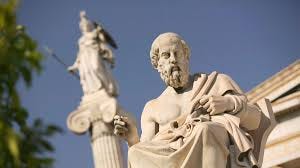
Plato disagrees. If there is a natural order and divine logos (reason) as Christians believe and Plato seems to believe, then objective truth exists and virtue is not of human creation. While Plato’s Republic does not base the foundation of moral goodness in the divine the way Christians do, the idea of an unchangeable form that brings order to motion is still crucial to Plato’s work. To Plato, the existence of a natural, unchangeable order means that our education and virtues can be attuned toward finding and pursuing whatever is objectively the highest good.
For Christians, this highest good is eternal life with Christ. Because God, not man, is the measure of all things to Christians, man has no right to “define one’s own concept of existence”. Instead, Christians look to the Bible, church tradition, and natural law (to varying degrees) to determine truth.
Such truths include the following: God created the world, made man and woman in his image, and saw that His creation was very good. God knew us before he formed us in our mother’s womb and knows every single hair on our head. And God so loved the world that He gave his one and only Son so that everyone who believes in Him will not perish but will have eternal life.
Thus, every human being possesses inherent dignity and value from conception to death because we are made in God’s image. But despite our value, the Bible teaches that man is not the measure of all things within the universe. We have been given authority and dominion over the Earth in Genesis 1, yet our role is not to master meaningless chaos as the ultimate arbiters of our relative truths. Rather, our job is to bring harmony to the world in accordance with God’s design for the world.
As Christians, we know that transgenderism is a lie. Yet, we are still called to love these people, empathize with their suffering, and try to lead them to Christ despite our differences. While not everyone will be saved, 1 Timothy 2 tells us God “wants everyone to be saved and to come to the knowledge of the truth.”
Given the wide chasm between the Christian and transgender worldviews, reaching these people may be easier said than done. But because transgender individuals are human beings who are wonderfully made in the image of God, it’s worth strategizing and acting to bring them into the fold.
And given the suffering and vulnerability of this group of people, logical persuasion won’t always be productive. At its roots, transgenderism is a deeply spiritual issue, and reaching transgender individuals requires following Jesus’s command to love them as ourselves. As former LGBTQ+ activist Rosaria Butterfield’s story shows,17 we never know how or in whom the Holy Spirit will work; all we can do is sow seeds through our words and actions.
For references, please see original post.
Comments