
Does Everything Happen For A Reason? - Jonathan Voos
- Ryan Culp
- May 31
- 3 min read

On human choice and The First Hymn
Dear reader,
Does everything happen for a reason?
This question has been on my mind recently because of several recent conversations where someone (including me) has attributed his current job situation to “everything happens for a reason.” The phrase itself is true. We serve a sovereign God who orchestrates all things for His good.
Nevertheless, “everything happens for a reason” is often misused and maligned by the context in which it is used. Let me explain.
Human beings are not automatons. We have the power to make decisions. Every day, we choose the clothes that we wear, the shows that we watch, and the food that we eat (spoiler: it’s Whataburger if I have a coupon).
This power extends into larger life decisions as well. I can choose whether or not I’m going to apply for that job, prepare for that interview, or make that large purchase. And I can choose whether or not I spend time reading my Bible, praying, discerning the guidance of the Holy Spirit, and fellowshipping with other believers.
These decisions matter and can influence the path that my life takes. If I ignore the Word of God, the promptings of the Holy Spirit, and the sound advice and wisdom of fellow believers, my life will likely end up in a very different place than it would have if I had listened. And although God foreknew the decisions I would make and the results of my decisions, that doesn’t mean I had no other choice. Everything still did happen for a reason, but that reason was likely disobedience.
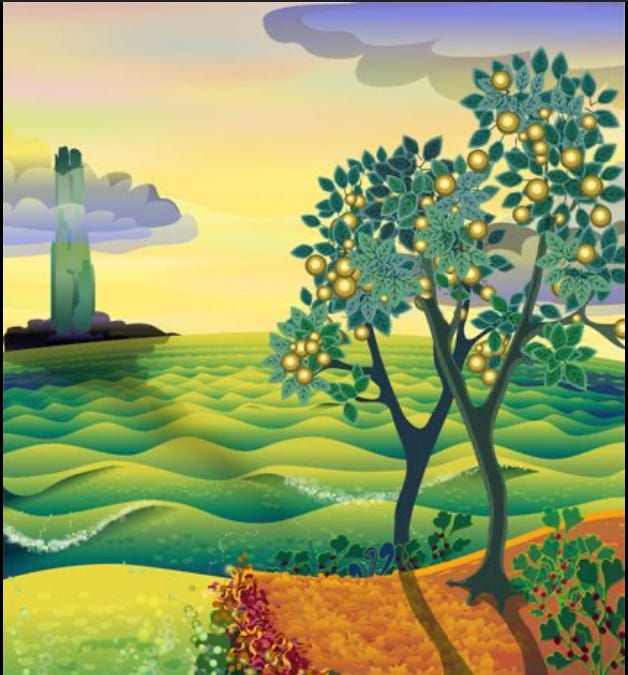
Take the creation story for example. Adam and Eve lived in paradise in the Garden of Eden—sinless, innocent, and with dominion over God’s created order. They did not have to eat the forbidden fruit. But at the bidding of the tempter, Eve chose to do so anyway and also gave some to Adam. Because of their choice, Jesus had to come in the form of a man and die on the cross for our sins. While we should praise Jesus for His sacrifice, no one would suggest that we should praise Adam and Eve for making that sacrifice necessary.
C.S. Lewis parses this illustration far more eloquently in his book, Perelandra. Perelandra involves an analogous creation story on Venus where the woman has not yet fallen but is in the process of being tempted. It is up to Ransom, the main character, to combat the lies and half-truths told by the tempter.
The land in Venus or “Perelandra” consists almost entirely of floating, untethered islands, except for one, fixed mainland. The woman and man in this story are forbidden from sleeping on the fixed land in the same way that Adam and Eve were forbidden from eating from the tree of knowledge of good and evil. The tempter in Perelandra wants the woman to break God’s law and sleep on the “fixed land.” He argues that but for Eve breaking God’s law, Jesus never would have come as a man on Earth—and wasn’t Jesus coming as man on Earth a good thing?
Lewis then has Ransom respond with this beautiful illustration:
"Of course good came of it. Is [Jesus] a beast that we can stop His path, or a leaf that we can twist His shape? Whatever you do, He will make good of it. But not the good He had prepared for you if you had obeyed Him. That is lost for ever. The first King and first Mother of our world did the forbidden thing; and He brought good of it in the end. But what they did was not good; and what they lost we have not seen. And there were some to whom no good came nor ever will come."
According to Romans 8:28, “God causes all things to work together for good to those who love God, to those who are called according to His purpose.” But “all things” may have worked out a lot more nicely for the human race if Adam and Eve had avoided the forbidden fruit and continued walking with God.
Likewise, we must be careful to obey and not quench the guidance of the Holy Spirit. We cannot use the idea that “everything happens for a reason” to abdicate our agency, responsibility, or need for reflection—as if the current set of circumstances we face were the only possible set of circumstances. When we stand before the judgment seat of God and account for how we lived our lives, “everything happens for a reason” will not be a sufficient excuse for waste and inattention. Instead, we must follow the call of Ephesians 5:15–21 and pay careful attention to how we walk, make the most of our time, understand the Lord’s will, and be filled by the Spirit.
Comments